
What is the Single Palm Change in Baguazhang, and Why It Matters Most
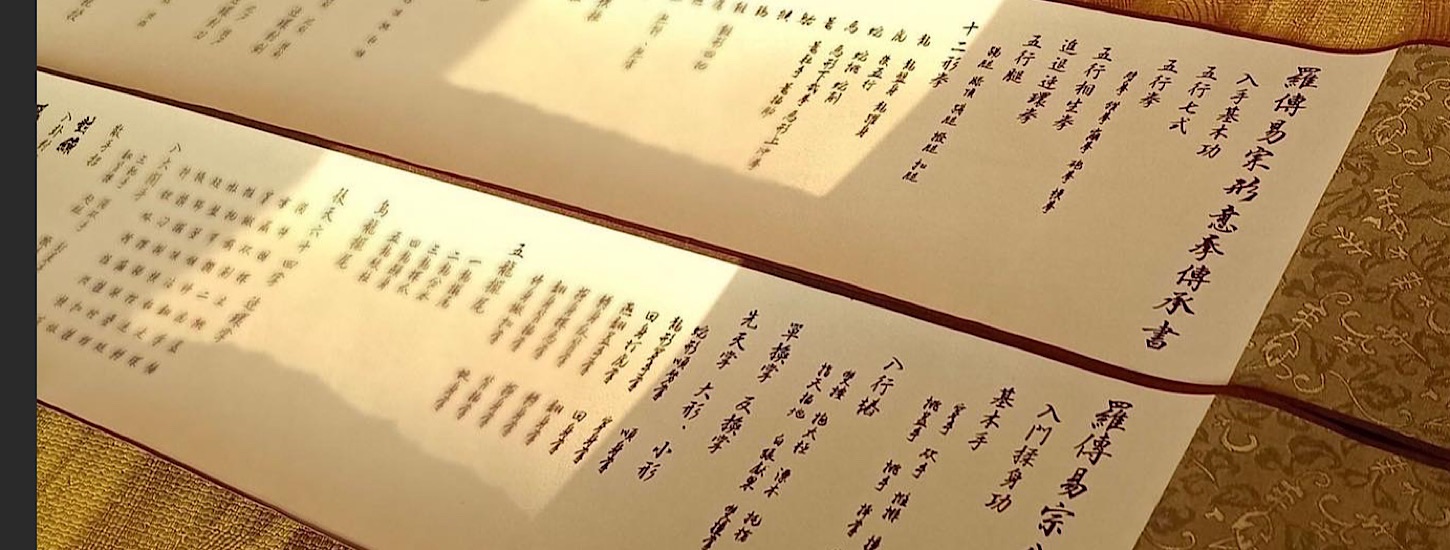
If you’ve begun researching Baguazhang seriously, you’ve encountered the single palm change—often presented as the first and most fundamental pattern in the art. But what is the single palm change in Baguazhang, and why do traditional lineages place such emphasis on it? In the Yizong Baguazhang tradition transmitted through Luo Dexiu, the single palm change is not merely an introductory exercise or a stylistic flourish. It is the root movement pattern that encodes the mechanical principles, spatial strategy, and force delivery methods of the entire system. Every other palm change, every application, every response to pressure builds from the structural blueprint established here.
Understanding the single palm change requires abandoning mystical explanations. This is not about mysterious energy or visualization. It is about organizing your skeletal structure to redirect incoming force, establishing efficient load paths through the body, and training precise timing for positional change under pressure. When executed correctly, the single palm change transforms the practitioner from a static target into a mobile, spiraling framework capable of continuous angular adjustment.
The Structural Core: What the Single Palm Change Actually Does
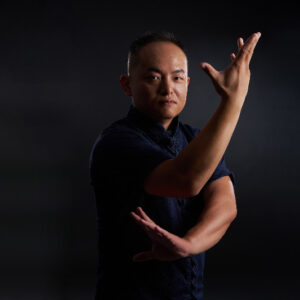
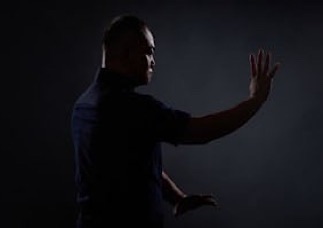
The single palm change is a complete reversal of orientation accomplished through a specific sequence of weight shifts, axis rotations, and postural adjustments while moving around a circle. In practical terms, you walk the circle in one direction with one palm forward, execute the change, and emerge walking the opposite direction with the opposite palm forward. The pattern appears simple. The internal complexity is profound.
What matters is not the endpoint but the transitional mechanics. During the change, your body passes through a structured vulnerability—the moment when you shift from one weighted leg to the other while rotating your torso and redirecting your facing. Traditional Baguazhang designed this pattern to train you to maintain structural integrity during this vulnerable transition. Your spine must remain supported, your root must transfer smoothly without bouncing upward, and your arms must maintain connection to your center throughout the rotation.
The single palm change establishes several load-bearing principles:
- Continuous pelvic-thoracic counter-rotation: The hips and shoulders rotate in opposition, creating a spiraling tension through the torso that stores and releases mechanical energy.
- Weight transfer without rising: The center of mass moves horizontally through the transition, maintaining constant pressure potential rather than dissipating force upward.
- Unified limb mechanics: The arms change position as a consequence of torso rotation, not as independent gestures, ensuring structural connection from ground to hand.
- Angular escape trajectory: The pattern trains diagonal entry and exit vectors, never retreating directly backward or advancing straight forward.
These are not abstract concepts. They are measurable mechanical realities that determine whether force applied against you can be redirected through your structure into the ground, or whether it collapses you.
Why This Pattern Serves as the Foundation
Every traditional Baguazhang lineage places the single palm change first in the curriculum for specific pedagogical reasons. In the Yizong system, we recognize it as the most efficient vehicle for installing fundamental movement patterns before layering complexity.
The single palm change contains sufficient complexity to challenge new practitioners but remains simple enough to allow hundreds of repetitions without mental fatigue. This repetition volume is essential. Internal martial arts skill develops through neuromuscular patterning—the gradual refinement of motor control until efficient structure becomes automatic under pressure. You cannot develop this through intellectual understanding or occasional practice. It requires extensive, focused repetition of correctly executed patterns.
The single palm change also provides a complete diagnostic tool. An experienced teacher can observe your single palm change and identify specific structural deficiencies: collapsed kua, disconnected arms, weight bouncing, broken spinal alignment, incorrect timing of rotation relative to stepping. Each error visible in this simple pattern will amplify in more complex sequences and applications. Conversely, correcting these errors in the single palm change immediately improves everything built upon it.
This is why serious practitioners in traditional schools may spend months—sometimes years—refining the single palm change before advancing. This is not hazing or mystical gatekeeping. It is mechanical necessity. The pattern must become reflexive, must survive fatigue and distraction, must remain intact when speed and pressure increase.
The Single Palm Change in Application
The single palm change is not itself a fighting technique. It is a movement principle that enables fighting techniques. Understanding this distinction separates functional training from performance-oriented practice.
In application, the single palm change represents the strategy of continuous positional adjustment. When an opponent commits force in one direction, the pattern trains you to spiral off the line of force while simultaneously reorienting toward a new angle of attack. The specific hand positions and stepping pattern practiced in the form provide one expression of this principle, but the underlying mechanical strategy applies across countless tactical situations.
The timing trained in the single palm change—when to shift weight, when to rotate the torso, when to extend the lead arm—directly translates to entering against an opponent. The pattern teaches you to begin your rotation before your step completes, allowing you to enter on a curve rather than a straight line. This curved entry naturally redirects linear attacks while creating angular advantage.
The structural requirements—maintaining a connected frame, not rising during weight transition, counter-rotating the torso—become non-negotiable under contact pressure. An opponent’s force will immediately expose structural gaps. The single palm change builds the muscular coordination and proprioceptive awareness to maintain structure while moving, which is exponentially more difficult than static posture.
Training the Single Palm Change Correctly
Correct practice requires attention to specific markers that ensure you are building functional structure rather than merely mimicking external shape.
First, walk the circle at a consistent radius. This is not arbitrary aesthetics—the fixed radius creates consistent centripetal requirements that train your body to lean correctly into the turn. Too large a circle removes the spiral training. Too small creates instability.
Second, standardize your pace. Use a metronome if necessary. Consistent timing allows you to identify exactly where in the sequence structural problems occur. Variable speed masks mechanical errors.
Third, monitor your head height. Place visual markers at eye level around your circle. If your head bobs up and down as you walk and change, you are bouncing your weight vertically rather than transferring it horizontally. This error wastes force and telegraphs your movements.
Fourth, film yourself from multiple angles. Your proprioception will lie to you, especially early in training. Video provides objective feedback on whether your torso rotates as a unit, whether your arms maintain position relative to your centerline, and whether your stepping maintains consistent rhythm.
The single palm change rewards patience. It reveals deeper layers of refinement as your sensitivity improves. What felt correct six months ago will feel crude as your structure develops. This is progress, not confusion.
Begin Your Baguazhang Foundation Correctly
The single palm change deserves your serious attention because it establishes the movement intelligence every other aspect of Baguazhang requires. If you’re ready to approach this art with the rigor it deserves, we’ve created a comprehensive introduction to the core principles. Download our free guide, The 5 Foundations of Baguazhang, at https://yizongtw.com/free-guide/ to begin building your practice on authentic structural principles.