
If you’ve searched “Baguazhang for beginners” hoping for a clear starting point, you’ve likely encountered mystical descriptions of “qi flow” and cryptic references to Daoist meditation. Let’s be direct: Baguazhang is a sophisticated martial art built on biomechanical principles, not metaphysics. The challenge for beginners isn’t accessing secret knowledge—it’s knowing which foundational elements to prioritize and which common practices waste your time before you’ve built the necessary structure.
Start With Structure, Not Stepping Patterns
Most beginners make the same mistake: they start walking the circle immediately, mimicking the distinctive coiling steps they’ve seen in videos. This is backwards. Without proper postural structure, circle walking becomes mere choreography—you’re tracing a pattern without developing the internal load-bearing architecture that makes Baguazhang functional.
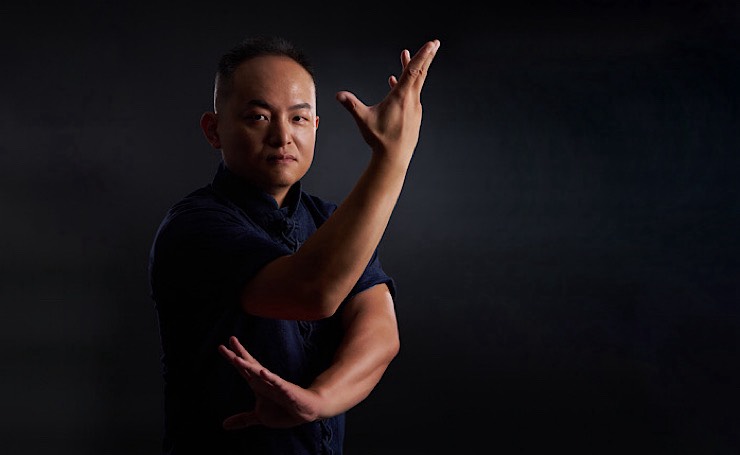
Begin instead with static post-standing (zhan zhuang). In the Yizong Baguazhang lineage, we use specific standing postures that establish whole-body connection through the skeletal frame. Your spine must find its natural suspended curve, your pelvis must tilt to engage the kua (inguinal fold), and your shoulder girdle must settle so force can transmit from the ground through your structure rather than dissipating in muscular tension.
Spend your first month—yes, month—holding basic stances for 10-20 minutes daily. You’re teaching your nervous system to maintain skeletal alignment under load. This isn’t meditation. This is building the foundation that allows your body to redirect incoming force through bone structure rather than absorbing it with muscle.
The Three Elements You Actually Need (And What to Skip)
Once you have baseline structural integrity, Baguazhang training divides into three concrete elements:
- Alignment under rotation: Baguazhang’s signature circular movement creates constantly changing force vectors. You must maintain spinal integrity and ground connection while your body rotates around its central axis. This is trained through single palm change exercises before complex forms.
- Force path efficiency: Every technique channels force from the ground through your structure to the point of contact. Begin with simple linear striking from your stance work, then add rotation. Can you feel the ground pushing back through your leg, through your connected torso, into your palm? If not, your structure has a leak.
- Timing and entry: Baguazhang’s circular footwork exists to create angles on opponents while maintaining your structure. This means nothing without understanding timing—when to enter, when to yield. This requires partner work with progressive resistance, not solo form repetition.
What to skip as a beginner: complex weapon forms, elaborate hand-change sequences with dozens of variations, breathing exercises divorced from movement, and any practice framed around “cultivating qi.” These aren’t wrong—some become relevant at intermediate levels—but they’re distractions before you can maintain structure under pressure.
Baguazhang for Beginners Requires a Clear Training Hierarchy
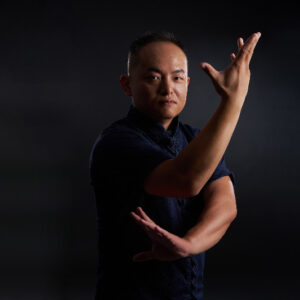
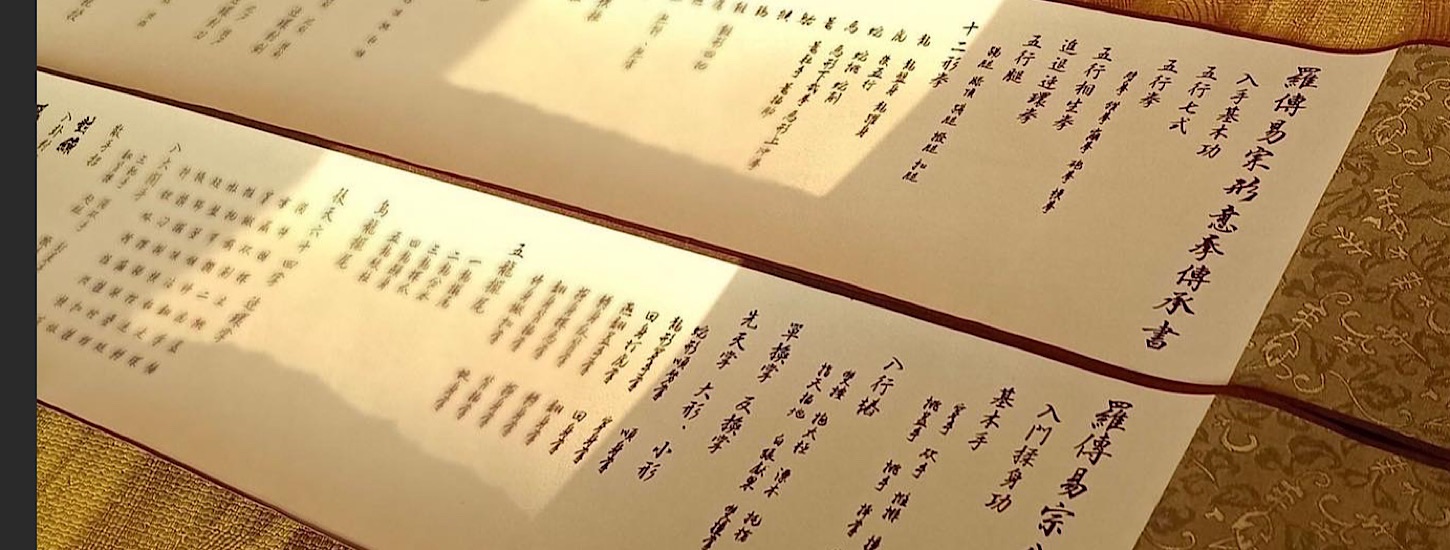
The Yizong lineage, transmitted through Luo Dexiu from Grandmaster Hong Yixiang, emphasizes a specific developmental sequence. This isn’t arbitrary tradition—it’s a tested pedagogical structure that builds capacity in the correct order.
Your first 3-6 months should focus on: static stance work (building postural integrity), basic palm strikes from stance (establishing force paths), and simple stepping drills that maintain your structure while moving. Notice what’s missing: long forms, circle walking with palm changes, and partner sparring. You’re not ready.
This is frustrating for beginners who want to “do Baguazhang.” But consider: a pianist learns hand position and scales before attempting Rachmaninoff. Baguazhang’s sophisticated applications—the circular evasions, simultaneous striking and redirecting, the famous “moving around the opponent’s structure”—all depend on your structure remaining coherent under rotational force. Build that first.
Months 6-12 typically introduce circle walking with basic palm changes, partner sensing drills (tuishou), and applications of your form movements against realistic resistance. By year two, you’re pressure-testing entries and working complex change sequences. This timeline assumes consistent, intelligent practice—3-4 sessions weekly with attention to structural detail, not mindless repetition.
Finding Quality Instruction (It Matters More Than You Think)
Baguazhang cannot be learned from videos alone. The defining characteristic of internal martial arts isn’t mystery—it’s precision. Small postural adjustments—a few degrees of pelvic tilt, the specific angle of shoulder settlement—make the difference between structure that holds under pressure and structure that collapses.
A qualified instructor from an established lineage (Yizong, Cheng, Yin, Gao—all have legitimate transmission) can feel when your structure is connected and when it’s not. They can apply incremental pressure to test your frame and identify exactly where it fails. Without this feedback, you’ll spend years reinforcing poor habits that appear correct superficially.
If in-person training isn’t immediately available, prioritize: online instruction from lineage-holding instructors who provide video feedback on your structure, supplemented by occasional in-person intensive workshops. Avoid: instructors who can’t clearly explain biomechanical principles, anyone emphasizing “energy” without discussing skeletal alignment, and programs promising rapid mastery.
Measuring Progress Without Delusion
How do you know if you’re actually developing Baguazhang skill? Simple tests:
- Can you maintain your standing posture for 20 minutes without structural collapse (shoulders rising, spine rounding, weight shifting forward)?
- When a partner pushes your extended arm, does the force transmit through your structure to your rear foot, or does your shoulder absorb it?
- Can you step while maintaining the same postural relationships you achieved in static stance?
- During slow-speed partner drills, can you redirect incoming force using rotation rather than muscular blocking?
These are observable, testable markers. If someone tells you your progress depends on subjectively “feeling qi,” find a different instructor. The sensations that arise from correct structure—ground connection, fascial tension, force transmission—are real physiological phenomena. Describing them doesn’t require mystical language.
Expect genuine baseline competency to take 2-3 years of consistent practice. This isn’t pessimistic—it’s honest. Baguazhang is a sophisticated martial art that reorganizes how your body produces and manages force. That reorganization happens through patient, structured repetition, not sudden enlightenment.
If you’re ready to start building your foundation correctly, we’ve created a detailed resource that breaks down the essential structural principles. Get our free guide ‘The 5 Foundations of Baguazhang’ at https://yizongtw.com/free-guide/ and begin with clarity instead of confusion.
Frequently asked questions
How long does it take to learn Baguazhang?
Baseline structural competency takes 2-3 years of consistent practice (3-4 sessions weekly). Functional martial ability develops over 5-7 years. Anyone promising faster results is selling fantasy, not skill.
Can I learn Baguazhang from YouTube videos?
No. Video can supplement instruction but cannot replace hands-on correction of your structure. Small postural errors invisible to you create major functional problems that only pressure-testing with a qualified instructor can identify.
What’s the difference between Baguazhang and tai chi?
Both are internal martial arts emphasizing structure over muscular force, but Baguazhang specializes in circular footwork and rotation-based power generation while tai chi typically uses more linear weight-shifting. Training methodologies and applications differ significantly between styles.
Do I need to be flexible to start Baguazhang?
No. Baguazhang requires structural integrity and coordinated movement, not extreme flexibility. Normal range of motion is sufficient; you’ll develop functional mobility through proper practice.
Is Baguazhang effective for self-defense?
Yes, when trained realistically with progressive resistance and pressure-testing. Baguazhang trained only as solo forms or light cooperative drills won’t develop functional fighting ability regardless of how many techniques you’ve memorized.