

Structure
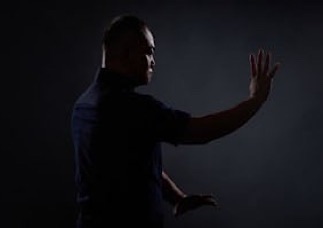
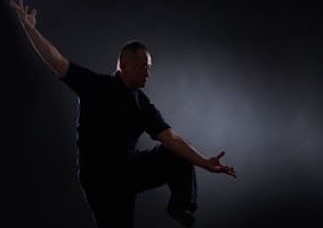
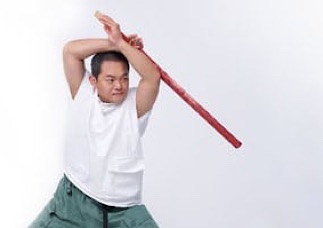
Martial efficiency begins with structure—not just in how we align ourselves, but in how we conserve energy, transfer force, and maintain responsiveness. A strong stance is not a static pose, but a network of elastic tension and conscious relaxation. We train to feel where tension accumulates, where weight should rest, and how to receive impact without collapse.
But structure isn’t only about holding our own shape. It’s also about interrupting the opponent’s. We learn to sense and disrupt the frameworks that support their balance and power. Whether striking, redirecting, or throwing, we engage not just with mass and movement, but with skeletal logic—using their own body’s architecture to unmake their intentions.
Rhythm
Rhythm governs how and when movement expresses itself.
Our practice sharpens the ability to break predictable patterns—to fragment timing like syncopation in music.
We draw the opponent’s attention, then take it away; we offer space, then take it back.
By controlling rhythm, we don’t just attack—we lead.

Flow
Flow begins not with movement, but with waiting.
Before you can follow momentum, you must first know how to recognize it—or even quietly shape it. In our system, we treat sei (勢) as neutral: a convergence of kinetic and potential energy that can arise from either side. We train to sense both our own force and our opponent’s, to draw it out, redirect it, and ride it. This is not about controlling the outcome—it is about cultivating the awareness to choose the moment.

Our motions are never singular gambles.
Every action carries with it a concealed fallback—a Plan B built into the body, a path of retreat, adaptation, or redirection. Instead of chasing a decisive finish, we prioritize continuity and contingency. To support this, our power must be smooth, scalable, and correctable—not fired like a gunshot, but delivered like the continuous thrust of a rocket: steady, adjustable, capable of change at any fraction of movement. A good technique always leaves room to pivot.

What we preserve is not merely a martial style—it is a structural recalibration.
Through rigor and internal logic, we return to the absolute fundamentals of force and decision-making.
We have moved beyond teaching the masses. This method now serves only those who require embodied intelligence at the highest level.
It is no longer a dialogue for everyone; it is a code for the few.
If you are looking for a hobby, look elsewhere.
If you are looking for the core, verify your resolve before you approach.
我們保存的不再是單純的武術風格,而是身心結構的校準工程。
這套系統不再為大眾服務,僅留給極少數追求極致決策與力量邏輯的人。
若尋求休閒,請另覓他處;若尋求核心,請先審視自身的決心。