
Yagyu Shinkage-ryu: A Parallel Study in Classical Swordsmanship
Yagyu Shinkage-ryu (柳生新陰流) is not part of the Yizong curriculum. It is a classical Japanese sword art that Chang Tung-i has studied separately, under 池之側浩師範 (Ikenokawa Hiroshi) of 二蓋笠会 (Nigaigashakai), in private lesson format. This page documents that study—presented here as a record of how exposure to a different tradition’s structural logic contributed to a broader understanding of how body mechanics function across different training contexts.
The value of sword training, in this context, lies not in any cross-validation of the empty-hand curriculum but in what the weapon itself reveals. A sword extends the body’s force chain; misalignment in the spine, shoulders, or grip becomes immediately apparent under load in ways that bare-hand work alone may not expose. The length and weight of the blade enforce a precision of structure that is instructive precisely because it is unforgiving. Sword study supplemented the understanding of body organization by adding a different set of mechanical constraints—not by explaining or validating what was already being trained.
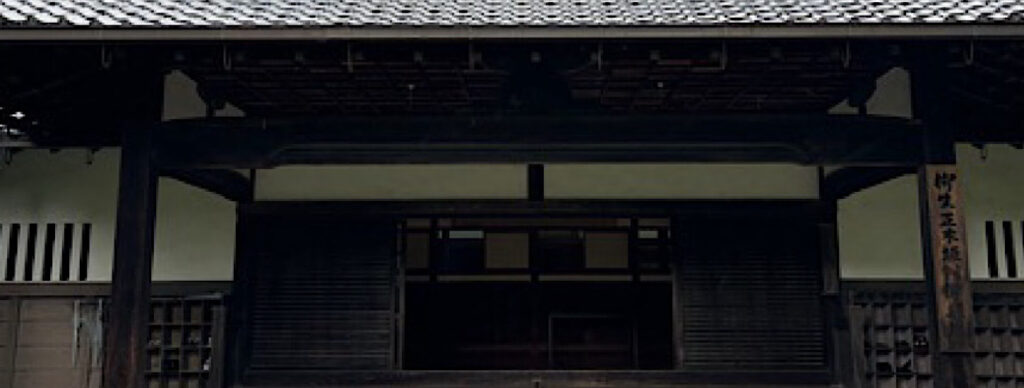
About Yagyu Shinkage-ryu and Nigaigashakai
Yagyu Shinkage-ryu is a classical Japanese sword school originating with Kamiizumi Ise-no-Kami Nobutsuna (上泉伊勢守信綱) and transmitted through Yagyu Sekishusai Munetoshi (柳生石舟斎宗厳) and subsequent generations. Its technical core emphasizes evasion and structural concealment over direct confrontation—the “shadow” (陰) in the school’s name refers to a hidden body axis that keeps the practitioner outside the opponent’s effective cutting line while maintaining the capacity to enter.
二蓋笠会 (Nigaigashakai) is the specific lineage organization through which this study takes place. Private lessons with 池之側浩師範 follow the traditional kata structure of the school, working through the curriculum set by set in sequence.
Complete Curriculum
The Nigaigashakai curriculum is organized into seven sets totaling 67 kata. Each set isolates a specific range of structural and tactical problems. No individual set is “advanced” in the sense of being optional—each builds on the previous and the entire sequence must be worked through before the later sets become mechanically legible.
燕飛 (Enpi / Swallow Flight) — 7 kata
The foundational set of the curriculum. Each of the seven kata introduces a core principle of evasion and entry: reading the opponent’s commitment, moving off the line of attack, and using the opponent’s structural extension to create an opening. The forms establish the basic movement logic that all subsequent sets elaborate.
三学円之太刀 (Sangaku Madori no Tachi / Three Studies Round Sword) — 5 kata
Five forms that examine three foundational structural configurations—specifically the relationships between circular movement, sword angle, and center positioning. These kata develop the spatial precision of interval (間, ma) that underlies the school’s approach to distance management.
九箇 (Kukka / Nine Forms) — 9 kata
Nine kata that expand the evasion and entry repertoire established in 燕飛 by introducing conditions where the initial movement line is disrupted, redirected, or inverted. The set addresses a wider range of structural situations than the foundational forms, requiring faster recognition and adjustment.
天狗抄 (Tengu Sho / Tengu Selections) — 8 kata
Eight kata addressing unusual angles and asymmetric timing situations. These forms develop flexibility of response rather than adherence to fixed patterns—the practitioner must adapt the structural principles already learned to conditions that do not fit the standard configurations of the earlier sets.
奥義之太刀 (Okugi no Tachi / Secret Techniques Sword) — 6 kata
The six transmissions of advanced structural principle within the school. These forms address mechanical problems left unresolved by all preceding sets and require the full technical foundation of the earlier curriculum before their content is accessible. The kata are taught only after the preceding sets have been worked through sufficiently.
試合勢法 (Shiai Seiho / Sparring Forms) — 27 kata
The largest set in the curriculum, working through a systematic range of engagement conditions—varying the initiative relationship, distance, and body orientation across 27 situations. The breadth of this set is the primary reason the complete Nigaigashakai curriculum is described as requiring a lifetime of study to fully absorb. Each form addresses a distinct tactical problem; no two are redundant.
十兵衛杖 (Jubei Jo / Jubei Staff) — 5 kata
Five staff kata developed within the Yagyu lineage. Staff work applies the same structural logic as the sword forms while solving the distinct mechanical problems posed by a longer, two-handed weapon—particularly with respect to grip positioning, center control, and range management.
Forms as Insight
Discover the deeper meaning behind each kata, where movement reveals method, and rhythm unveils intent.
Explore the Forms