
What San Ti Shi Actually Builds
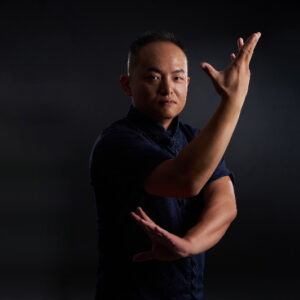
Xingyiquan’s San Ti Shi—the “three bodies posture” or trinity standing—is the standing posture that builds everything in this internal martial art. Unlike passive meditation stances, San Ti Shi is a precisely structured position that trains your body to organize force along optimal paths from ground to striking surface. This isn’t about cultivating mystical energy; it’s about neurological patterning, connective tissue adaptation, and learning to route mechanical force efficiently through your skeletal structure. Every fighting application in Xingyiquan assumes the structural relationships and force delivery mechanisms you develop through dedicated San Ti Shi practice.
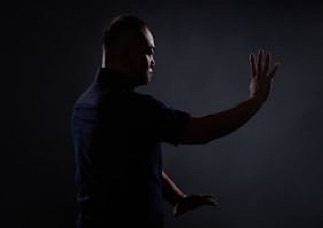
The posture appears deceptively simple: a high stance with weight distributed roughly 60-40 between rear and front legs, arms extended in a specific geometric relationship to your torso, spine vertically organized. But this simplicity is precisely the point. San Ti Shi strips away complexity to isolate the fundamental structure that must be present in every Xingyiquan technique, from Pi Quan’s splitting fist to Beng Quan’s crushing strike. Stand incorrectly, and you’re simply enduring discomfort. Stand with precision, and you’re reprogramming how your body organizes itself under load.
The Structural Requirements That Matter
San Ti Shi demands specific structural relationships that translate directly to power generation. Your rear foot turns outward approximately 45 degrees, creating a stable base and allowing your kua (inguinal crease/hip complex) to fold correctly. The front foot points forward, knee tracking over the toes without collapse. This isn’t arbitrary—it creates a ground path where force can travel from rear foot through a spiraled loading of the legs and hips, up through the torso, and out through the lead hand.
The spine maintains vertical integration—not rigid, but organized with natural curves preserved. Your head, hips, and rear foot should align roughly along a single plane. The rear arm guards your centerline, elbow dropped, with the hand positioned to protect your ribs and solar plexus. The lead arm extends forward at approximately shoulder height, elbow maintaining a slight bend that preserves structural connection rather than muscular tension.
These positions create what we call “contradictory forces”—simultaneous opposing vectors that create stability through dynamic tension rather than muscular rigidity. Your rear foot presses back as your front foot presses forward. Your crown lifts as your tailbone drops. Your hands push forward as your spine pulls back. These aren’t metaphors; they’re specific muscular engagements and proprioceptive focuses that train your nervous system to maintain structural integration under the stress of holding the position.
The Training Timeline: What Changes and When
Beginners typically experience San Ti Shi as pure suffering. Thighs burn, shoulders fatigue, and the position feels impossibly awkward. This phase—usually the first four to eight weeks of regular practice—is largely about adaptation. Your postural muscles are learning new firing patterns. Connective tissues are beginning to adapt to the specific loads. Most importantly, you’re developing the proprioceptive awareness to know where your body is in space without visual confirmation.
After consistent practice for two to four months, structural holding becomes less about endurance and more about refinement. You can maintain the basic shape for ten, fifteen, or twenty minutes without complete muscular exhaustion. Now the real work begins: learning to identify and release unnecessary tensions while maintaining the structural requirements. This phase teaches differentiation—the ability to engage specific tissue chains while relaxing others, to route force along particular paths rather than diffusing it throughout your body.
At six months to a year of regular practice, San Ti Shi begins to feel like your natural position. The structure integrates into your movement vocabulary. When you throw Pi Quan, your body automatically organizes the same spinal alignment, the same ground connection, the same contradictory forces you’ve drilled through thousands of hours of standing. This is why San Ti Shi is considered foundational—it’s not preparatory exercise for the “real” training. It is the essential pattern that every other technique expresses in motion.
Common Structural Errors and Their Corrections
The most frequent error is weight settling into the quadriceps rather than organizing through the skeletal structure and posterior chain. If your thighs are burning intensely within two minutes, you’re likely holding yourself up with muscular force rather than structural organization. The correction involves subtle posterior weight shift, allowing the femur heads to seat more fully in the hip sockets, and engaging the kua fold that transfers load through the pelvis rather than suspending it in the thigh muscles.
Shoulder elevation and chest tension represent another common pattern. Practitioners raise their shoulders and lift their chest, creating muscular rigidity in the torso. This blocks the force path from legs through torso to arms. The correction requires actively dropping the shoulders, allowing the chest to relax inward slightly (not collapse, but settle), and maintaining connection through the back rather than the front of the torso. Your scapulae should feel wide and slightly wrapped around your ribcage.
Locked knees and elbows destroy the structural pathways San Ti Shi develops. Joints locked under tension become force insulators rather than conductors. Every joint should maintain what we call “springy” quality—not bent dramatically, but preserving enough angle that force can transmit through rather than jamming into the joint structure. Think of your skeleton as a series of connected levers, each maintaining optimal angle for force transmission rather than terminal extension.
Integration: From Standing to Fighting
San Ti Shi isn’t merely preparation for Xingyiquan’s five fists and twelve animals—it’s their structural template. When you practice Pi Quan, you’re essentially moving through San Ti Shi structure while splitting vertically. Beng Quan maintains the same spinal organization while driving horizontally forward. Pao Quan expresses identical contradictory forces in its explosive release. Every technique is San Ti Shi in motion, adapted to specific tactical applications.
This is why serious Xingyiquan practitioners return to San Ti Shi throughout their training lives, not just as beginners. Standing practice reveals structural inefficiencies that become invisible in motion. It allows you to isolate and correct alignment issues, force path disruptions, and tension patterns that compromise your technique. Twenty minutes of standing often teaches more about your current technical deficits than an hour of form practice.
The standing posture that builds everything in Xingyiquan builds it by encoding fundamental structure so deeply into your nervous system that it becomes your default organization under pressure. This is internal power demystified: not ethereal energy, but trained biomechanical excellence expressed through precise structure, efficient force paths, and timing developed through thousands of repetitions of the basic pattern.
While this article focuses on Xingyiquan’s foundational practice, these principles of structural training, force path development, and precise biomechanics apply across internal martial arts. If you’re interested in how similar concepts manifest in Baguazhang practice, we invite you to download our free guide “The 5 Foundations of Baguazhang” at https://yizongtw.com/free-guide/.
Frequently asked questions
How long should I hold San Ti Shi as a beginner?
Start with 3-5 minutes per side and focus on structural precision rather than duration. Gradually increase to 10-15 minutes as your structure stabilizes and postural muscles adapt, typically over 8-12 weeks of consistent practice.
Why do my legs shake when holding San Ti Shi?
Shaking indicates neurological adaptation as your nervous system learns new firing patterns and your postural muscles develop endurance. This is normal in the first 4-8 weeks and will decrease as your structure organizes more efficiently.
What’s the difference between San Ti Shi and zhan zhuang?
San Ti Shi is an asymmetric fighting posture specific to Xingyiquan that trains structure for striking applications. Zhan zhuang typically refers to more neutral standing meditation postures, though some systems use the terms differently.
Should San Ti Shi hurt?
Muscular fatigue and deep structural ache are normal; sharp joint pain is not. If you experience knee, hip, or back pain rather than muscle fatigue, your alignment needs correction—seek qualified instruction before continuing.
Can I practice San Ti Shi without learning full Xingyiquan?
While San Ti Shi offers significant structural benefits in isolation, its true value emerges in how it integrates with Xingyiquan’s fighting applications. Without understanding the force paths you’re training, you’re missing critical context that guides correct practice.