
What is Peng Jin and How Do You Actually Train It?
If you’ve spent time in Taijiquan, Baguazhang, or Xingyiquan circles, you’ve heard the term peng jin (掤勁) thrown around—often described mystically as “ward-off energy” or an elusive quality that senior practitioners possess but rarely explain clearly. The problem with most discussions of peng jin is that they rely on vague notions of “qi expansion” or “energetic balloons” that leave serious practitioners with nothing concrete to train. In reality, peng jin is a specific structural quality combined with precise force management: it’s the ability to maintain optimal skeletal alignment under pressure while redirecting incoming force through connected pathways in your body. Understanding what peng jin actually is and how to develop it systematically will transform your internal martial arts practice from theoretical movement to functional skill.
The Structural Reality of Peng Jin
Peng jin is fundamentally about structural integrity under load. When someone pushes you and you maintain your frame without collapsing, without rigidly resisting, and without disconnecting your body segments—that’s peng. Think of it as the difference between a suspension bridge and a brick wall: the brick wall resists through mass and rigidity, while the suspension bridge distributes force through its entire connected structure.
In physical terms, peng jin requires three simultaneous qualities:
- Skeletal alignment that creates clear paths from the point of contact through your body to the ground
- Connective tissue tension (not muscular tension) that maintains your spatial frame
- Dynamic stability that allows micro-adjustments without losing structural connection
When you have proper peng, an incoming force travels through your structure to the ground while you maintain the ability to redirect or issue force yourself. Your partner feels like they’re pushing something spherical and alive—not because of mystical energy, but because your structure gives them no flat surface to collapse, no dead angle where force stops moving.
Why Most Peng Training Fails
The most common training mistake is attempting to create peng through muscular tension or “making a shape” with your arms. You’ll see practitioners holding their arms in a rounded position, flexing their shoulders and chest, thinking they’re developing ward-off energy. This creates the opposite of peng—it creates rigidity with gaps in the force path.
Another frequent error is overemphasizing relaxation without understanding what you’re relaxing for. Yes, unnecessary muscular tension must go, but you’re not training to become limp. You’re releasing gross muscle tension to reveal and develop the deeper connective tissue structure that can hold a frame without fixation.
The third mistake is training peng as a static posture rather than a dynamic quality. Peng must function while you’re moving, turning, expanding, and contracting. A structure that works while standing still but collapses the moment you step is not peng—it’s just a pose.
How to Actually Develop Peng Jin
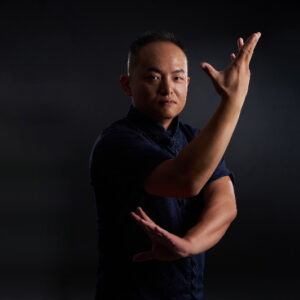
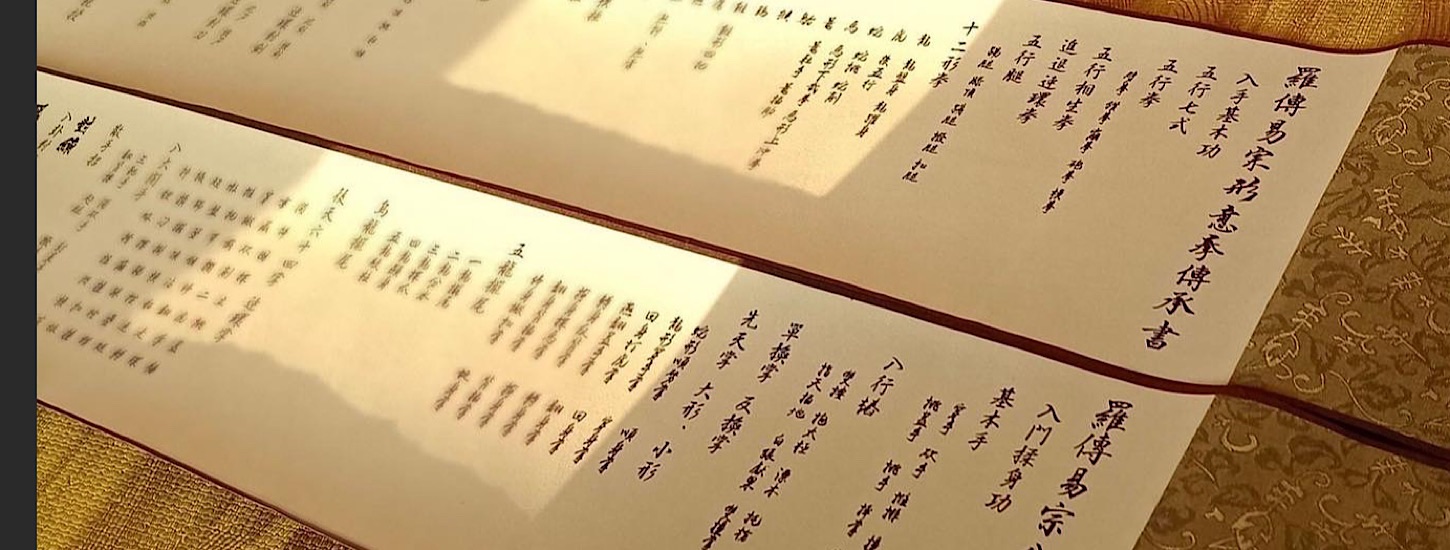
In the Yizong Baguazhang system transmitted through our lineage, peng development follows a clear progression:
First, establish basic structural alignment through standing practice. This isn’t mystical “standing meditation”—it’s loading your skeleton in specific configurations to develop awareness of force paths. In our foundational standing postures, you learn to feel the ground connection through your feet, maintain spinal integration, and position your shoulders and elbows so that force can travel through them rather than stopping in the joints. Expect to spend months here. Your legs will shake, your shoulders will fatigue, and slowly you’ll find the skeletal pathways that allow you to hold the position with decreasing muscular effort.
Second, add calibrated pressure with a partner. Have your partner place their hands against yours with gradually increasing pressure while you maintain your structure. The key word is calibrated—too much pressure and you’ll revert to muscular resistance; too little and you won’t learn anything. You’re looking for the amount of force that challenges your structure without overwhelming it. As your partner pushes, you make micro-adjustments in your root, spine position, and joint angles to keep the force traveling through your structure rather than stopping in your arms or shoulders.
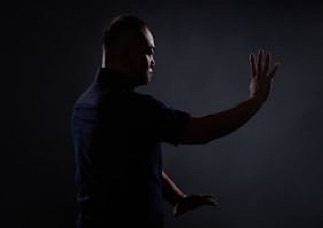
Third, maintain peng through movement. This is where Baguazhang circle walking becomes the essential training laboratory. As you walk the circle, maintaining your structural frame while constantly changing direction, you develop peng as a dynamic quality rather than a static position. The circle’s continuous rotation forces you to maintain connection through your entire body while your orientation to space constantly shifts. Your arms aren’t just held in a position—they’re maintaining structural relationship to your center and to the ground as you move.
Fourth, test peng under realistic pressure. Partner drills that involve pushing, sudden force changes, and attempts to collapse your structure from various angles are essential. This isn’t compliant cooperative training—your partner is genuinely trying to find the holes in your structure. When they find them (and they will), you’ve identified exactly what you need to work on.
Peng Jin in Baguazhang Application
In Baguazhang, peng jin isn’t just a quality you have—it’s the foundation for every technique. When you execute a palm change, your peng maintains the connection between your striking hand and your feet, allowing whole-body power to express through the technique. When you redirect an opponent’s strike, peng allows you to stay connected to their force while turning, so you’re controlling them through structure rather than trying to muscle their arm around.
The circular nature of Baguazhang makes peng particularly important. Unlike arts that rely more on linear power generation, Bagua techniques spiral, requiring you to maintain structural integrity while rotating. Without peng, these techniques become arm-only movements with no root. With peng, every turn and palm strike has your entire body behind it, channeled through precise structure.
This is why we emphasize that peng jin is not a mystical attainment but a specific physical skill that must be developed through consistent, progressive training. Like any physical skill, it requires correct instruction, deliberate practice, and time. You’ll know you’re developing real peng when partners of various sizes and strength levels consistently comment that pushing you feels different—not harder or softer, but more alive and less exploitable.
Begin Your Foundation Work
Developing genuine peng jin requires systematic training in proper body structure, force management, and movement integration. If you’re interested in understanding how these principles form the foundation of effective Baguazhang practice, we’ve created a free guide that outlines the five essential elements every practitioner needs to develop. Get your copy of The 5 Foundations of Baguazhang at https://yizongtw.com/free-guide/ and start building the structural skills that make internal martial arts actually work.
Frequently asked questions
How long does it take to develop peng jin?
Expect at least 1-2 years of consistent practice to develop basic peng that functions under pressure, and several more years to refine it through movement and application. There are no shortcuts—this is a structural skill that requires time for your body to adapt.
Can you have peng jin without doing push hands?
Push hands or similar partner pressure testing is essential for developing functional peng jin. Solo practice builds the framework, but you need calibrated resistance from another person to learn how to maintain structure under actual force.
Is peng jin the same in Taiji and Baguazhang?
The underlying principle—maintaining structural integrity while redirecting force—is the same, but the expression differs. Baguazhang’s constant rotation and circular movement requires developing peng that functions through continuous spatial change, not just in static or linear contexts.
Do you need to be relaxed to have peng jin?
You need to release unnecessary muscular tension, but ‘relaxed’ is misleading. Peng requires active structural tension through connective tissue while remaining free of rigid muscular contraction. Think ‘elastic and connected’ rather than ‘loose and floppy.’
What’s the difference between peng jin and just being strong?
Muscular strength creates local force but often with structural gaps and rigidity. Peng jin distributes force through your entire connected structure to the ground, allowing you to handle pressure from any angle without muscular fixation. A strong person without peng will have exploitable dead angles; proper peng has none.