
The Question Every Internal Arts Beginner Asks
When someone decides to pursue internal martial arts seriously, they inevitably face the question: Baguazhang vs Taijiquan—which internal art should a beginner start with? Both belong to the trinity of internal arts alongside Xingyiquan, both develop sophisticated body mechanics and martial effectiveness, and both require years of dedicated practice. Yet they approach these goals through fundamentally different movement vocabularies and training methodologies. The answer depends less on which art is “better” and more on how each training system aligns with your body, temperament, and goals.
This isn’t about mystical energy flows or spiritual philosophies. It’s about biomechanics, proprioception, and how different training methods develop power generation, structure, and timing. Let’s examine what each art actually trains and what that means for you as a beginner.
What Taijiquan Actually Develops
Taijiquan’s genius lies in its obsessive focus on continuity and connection. The slow-form practice—which occupies years of a beginner’s training—teaches you to move your entire body as a unified structure while maintaining constant awareness of weight distribution, joint alignment, and force paths through the kinetic chain.
The biomechanical principles are clear: Taiji develops power through ground path efficiency, where force generated from the legs travels through a connected structure to the hands. The slowness isn’t meditative aesthetics—it’s the speed at which your nervous system can consciously track and correct structural errors. Push hands (tuishou) provides progressive resistance training where you learn to redirect incoming force through minimal structural adjustment rather than muscular effort.
For beginners, Taijiquan offers several advantages:
- The movements are generally larger and slower, making structural errors more obvious and corrections easier to implement
- The training progression is extremely well-documented, with clear benchmarks for developmental stages
- The partner training methodology (push hands) provides immediate, scalable feedback on your structural integrity
- It’s relatively easier on the knees and joints during the initial learning phase
However, Taijiquan’s slow development timeline can test your patience. Expect two to three years before the movement vocabulary becomes instinctive enough to explore meaningful applications. The art’s popularity also means finding qualified instruction requires careful vetting—there are many teachers emphasizing health benefits or philosophical concepts while lacking martial transmission.
How Baguazhang Builds Different Capabilities
Baguazhang constructs internal power through a radically different approach. While Taiji emphasizes rooting and connection within relatively fixed positions, Bagua develops these qualities while in constant rotational motion. The signature circle walking practice isn’t ceremonial—it’s a sophisticated conditioning method that trains your body to maintain structural integrity through continuous direction changes.
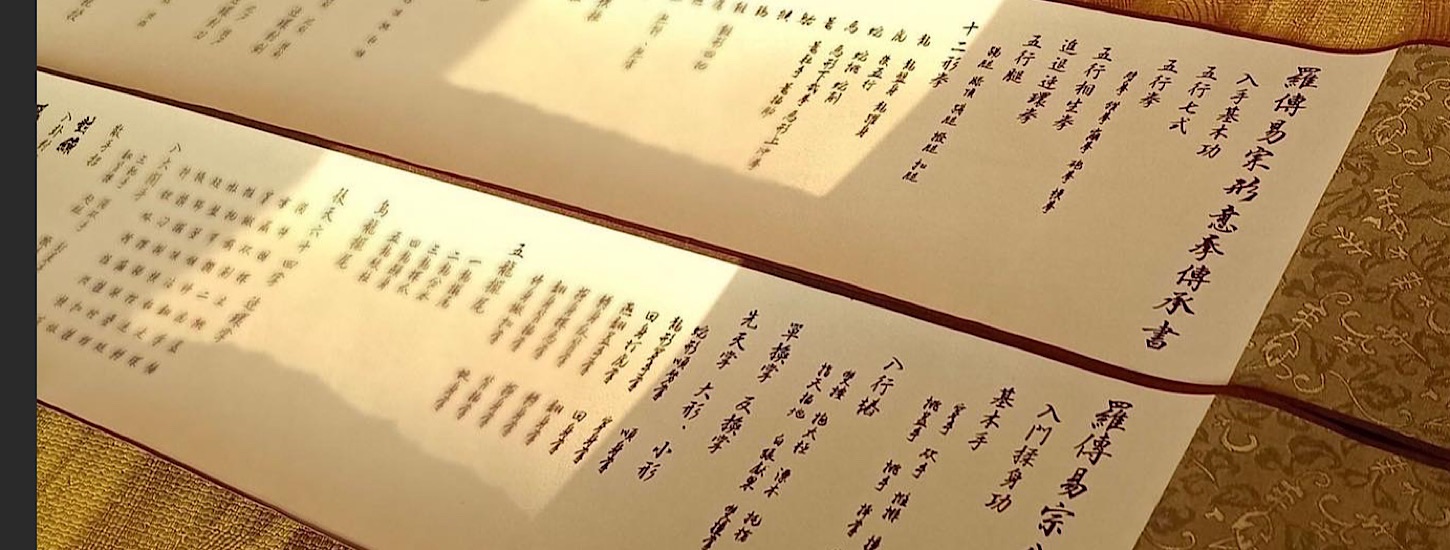
The Yizong Baguazhang system, transmitted through our Luo Dexiu lineage, trains several specific capabilities from day one:
- Dynamic structure: maintaining force paths and ground connection while your facing, footwork, and weight distribution change continuously
- Spiral power generation: producing force through rotational acceleration of body segments rather than linear extension
- Spatial adaptability: automatically adjusting distance and angle while maintaining offensive potential
- Multi-directional awareness: processing threats and opportunities in 360 degrees rather than a frontal arc
For beginners, Bagua presents different trade-offs. The circle walking provides a clear, repetitive training vehicle that develops leg strength, proprioception, and breath coordination simultaneously. You’re not waiting to “finish” the form before understanding applications—every palm change contains complete martial logic from the start.
The challenges are equally clear: the constant turning stresses knees and ankles differently than linear arts, requiring careful attention to alignment. The movements feel more foreign to most people’s existing movement vocabulary, creating a steeper initial learning curve. And the training is simply more physically demanding in the first year.
Matching Art to Individual Context
The honest answer to “Baguazhang vs Taijiquan: which internal art should a beginner start with?” depends on several practical factors:
Your current physical condition: If you have knee issues or significant joint problems, Taijiquan’s lower initial impact makes it the wiser choice. If you have good joint health and reasonable conditioning, Bagua’s demands are manageable and productive. If you’re recovering from injury or working with limited mobility, Taiji’s adaptability offers more accommodation.
Your training goals: If you want sophisticated sensitivity to pressure and incoming force, Taiji’s push hands methodology is unmatched. If you want to develop evasive footwork and the ability to manage multiple angles, Bagua’s training is more direct. If you’re interested in eventually training both (a common and worthwhile path), starting with either gives you a valid foundation—they’re complementary, not contradictory.
Your temperament: Taijiquan rewards patience and attention to subtle refinement. Progress feels incremental but compounds dramatically over time. Baguazhang offers more immediate physical challenge and clearer conditioning effects early on. Neither is “harder” ultimately—they’re hard in different ways at different stages.
Available instruction: This may be the most decisive factor. A skilled teacher in either art is vastly preferable to mediocre instruction in both. Quality internal arts transmission requires direct correction of physical habits you cannot see in yourself. If you have access to legitimate teaching in one art but not the other, that should determine your starting point.
The Real Beginning Point
Both Baguazhang and Taijiquan develop the same fundamental internal qualities—integrated structure, force efficiency, precise timing, and the ability to borrow incoming energy rather than opposing it with muscle. They simply build these capacities through different movement strategies.
The beginner’s real challenge isn’t choosing the “right” art—it’s committing to consistent, intelligent practice under qualified guidance. Internal arts develop capabilities that simply don’t emerge from casual training. You’re retraining fundamental movement patterns, which requires thousands of correct repetitions to override your existing neuromuscular habits.
What matters most: find legitimate instruction in whichever art is available to you, commit to at least two years before judging your progress, and focus on structural principles rather than collecting techniques. The sophisticated capabilities you see in advanced practitioners emerged from years of basic training done with precision and patience.
If you’re drawn to Baguazhang’s strategic approach and our Yizong lineage’s systematic training methodology, we’ve created a detailed guide that breaks down exactly what the art develops and how the training works. The 5 Foundations of Baguazhang explains the core principles without mysticism or vagueness—just clear information about what you’ll actually be learning. Get your free copy at https://yizongtw.com/free-guide/ and see if this training approach matches what you’re looking for.
Frequently asked questions
Is Baguazhang harder to learn than Taijiquan?
Baguazhang has a steeper initial physical demand—the constant turning and lower stances challenge leg strength and joint stability immediately. Taijiquan is more forgiving early on but requires exceptional patience for its slow development timeline. They’re difficult in different ways at different stages.
Can I train both Baguazhang and Taijiquan at the same time as a beginner?
Not recommended. Each art retrains fundamental movement patterns, and mixing them before either is established creates conflicting motor habits. Establish a solid foundation in one art for at least two to three years, then cross-training becomes productive rather than confusing.
Which internal martial art is better for self-defense?
Both develop effective martial capability, but only with years of correct training. Baguazhang’s footwork and angular strategy offer advantages in managing multiple opponents or chaotic situations. Taijiquan’s sensitivity training excels in close-range control. If self-defense is urgent, consider supplementing with a modern combat system while building internal arts foundations.
How long before I see results from Baguazhang training?
Measurable leg conditioning and improved balance appear within three to six months of consistent circle walking. Functional martial capability—actually being able to apply the principles under pressure—requires two to four years minimum. Internal arts are long-term investments, not quick fixes.