


The Structural Definition of Internal Power
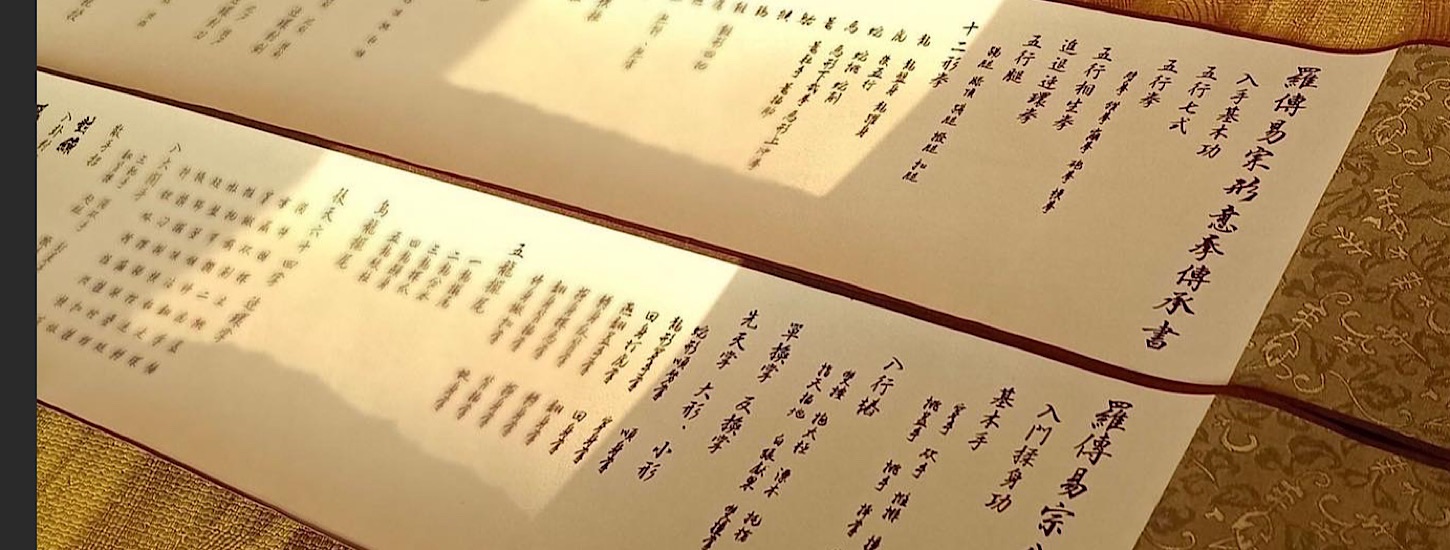
When people search for what ‘internal’ really means in the internal martial arts, they’re usually trying to cut through decades of mystical nonsense about chi balls and energy projection. In the Yizong Baguazhang lineage transmitted through Luo Dexiu, we define internal power with mechanical precision: it refers to the method of generating and transmitting force through optimal skeletal alignment, connective tissue integration, and refined timing rather than through localized muscular contraction. This isn’t about mystical energy—it’s about physics, biomechanics, and the efficient architecture of the human body under load.
The term “internal” (nei jia) historically distinguished arts that prioritized whole-body integration and minimal telegraphing from “external” (wai jia) methods that emphasized visible muscular exertion and chambered techniques. In practical terms, an internal method allows you to issue force from any position without preparation, redirect incoming force through structural alignment rather than blocking strength-against-strength, and maintain your own stability while disrupting your opponent’s. These aren’t supernatural abilities—they’re the natural result of training your body as an integrated mechanical system.
Force Paths and Connective Tissue Integration
Internal power relies on establishing clear force paths through the body’s skeletal structure, supported by tensioned connective tissue rather than contracted muscle. When you push a heavy object with muscular strength alone, force dissipates at each joint that isn’t perfectly aligned. When you establish a connected force path—ankle to knee to hip to spine to shoulder to hand—the ground reaction force travels through your structure with minimal loss.
This is where the concept of “peng jin” becomes relevant. Often mistranslated as “ward-off energy,” peng describes the springy, omnidirectional structural integrity created when fascia, tendons, and ligaments are properly loaded while muscles remain relatively relaxed. Imagine the difference between a chain lying slack on the ground versus that same chain pulled taut between two points—the latter can transmit force and resist pressure from multiple angles, while the former collapses under minimal load.
In Baguazhang practice, we develop this quality through:
- Circle walking: Maintaining spiral alignment while in constant rotation, which loads the connective tissue in three-dimensional patterns unavailable in linear training
- Static postures: Holding specific shapes that challenge you to support load through structure rather than muscular gripping
- Partner feedback: Testing whether your force paths remain intact under pressure, revealing exactly where your structure breaks down
The body learns to create what we call “whole-body connection”—not a mystical state, but a trained neuromuscular pattern where the fascia maintains optimal tension and the nervous system coordinates the body as a single functional unit rather than as isolated parts.
Timing and the Neuromuscular Component
Structural alignment alone doesn’t create internal power—timing is equally critical. The difference between internal and external methods shows most clearly in when force is generated relative to contact. External methods typically chamber techniques, building momentum before impact. Internal methods generate force at the moment of contact through precise timing of the ground connection, spinal engagement, and limb extension.
This timing depends on neuromuscular efficiency. Most people generate force through a sequence: they decide to push, signal the muscles to contract, and eventually force appears. This telegraphs intent and creates a delay. Internal training rewires this pattern so that structural engagement and force generation become nearly simultaneous. You’re not “trying” to push—you establish a connection and let your structure do what it’s already organized to do.
Consider fajin (explosive force release). From the outside, it looks like sudden power from nowhere. Mechanically, it’s the rapid conversion of stored elastic potential in the tensioned connective tissue into kinetic energy, coordinated with a brief ground connection and whole-body whip. The power comes from releasing tension through the established force path with precise timing, not from muscular effort. This is why smaller practitioners can generate surprising impact—they’re using mechanical advantage and timing rather than muscle mass.
Why Structure Beats Strength
The strategic advantage of internal methods becomes clear when you understand leverage and stability. When you use localized muscle to generate force, you create an equal and opposite reaction within your own body—push hard with your arm, and you push yourself backward unless you brace heavily. This bracing reduces mobility and creates static, predictable positions.
Internal structure changes this equation. When force travels through aligned bone, supported by connective tissue, with minimal muscular involvement, you can redirect incoming force by making small structural adjustments rather than opposing it with strength. Your opponent pushes, encounters no resistance point to target, and finds their force traveling past you or back into themselves. This isn’t magic—it’s the mechanical reality of redirecting vectors through angular changes in skeletal alignment.
This approach also preserves energy during extended engagement. Muscular contraction fatigues quickly; structural support can be maintained much longer because you’re using the body’s passive support systems. A properly aligned frame can bear significant load with minimal effort, just as a well-built arch supports weight without the stones “trying” to hold position.
The Training Methods That Develop Internal Qualities
Understanding internal power intellectually doesn’t create the ability—you need specific training methods that teach your nervous system these patterns. In Yizong Baguazhang, we emphasize:
Progressive relaxation under load: Not collapse or limpness, but releasing unnecessary muscular tension while maintaining structural integrity. We test this constantly through partner work—if your structure holds while your muscles stay relatively soft, you’re developing internal connection.
Spiral and rotational movement: Linear training develops force paths in limited planes. Baguazhang’s circular methodology creates three-dimensional structural integration and the ability to generate force from any angle. The constant turning loads the body’s fascial spirals and trains transitions between structures.
Sensitivity development: You can’t adjust your structure to redirect force if you can’t feel force clearly. Partner exercises develop tactile sensitivity—the ability to detect direction, magnitude, and timing of incoming pressure early enough to respond structurally rather than reactively.
Incremental pressure testing: Structure breaks down under sufficient load, revealing exactly where your force paths disconnect. Systematic testing at gradually increasing intensities shows you specifically what needs development, removing guesswork from training.
These methods don’t require decades to show results, but they do require consistency and honest feedback. Most practitioners notice improved stability and connection within months; refined internal power develops over years of correct practice.
Begin Your Internal Training Journey
Understanding internal power as structure, force paths, and timing rather than mystical energy gives you a clear training roadmap. If you’re interested in developing these qualities through authentic Baguazhang practice in the Luo Dexiu lineage, we’ve created a detailed introduction to get you started. Download our free guide “The 5 Foundations of Baguazhang” at https://yizongtw.com/free-guide/ to learn the specific principles and exercises that build genuine internal skill.
Frequently asked questions
Is internal martial arts power real or just mysticism?
Internal power is real and mechanical—it refers to force generation through skeletal alignment, connective tissue integration, and whole-body coordination rather than localized muscle contraction. The mystical descriptions obscure what is fundamentally a biomechanical skill that can be tested, measured, and systematically trained.
How long does it take to develop internal power?
Most practitioners notice improved structural stability and connection within 3-6 months of consistent, correct practice. Refined internal power that functions reliably under pressure typically requires 3-5 years, though this depends entirely on training quality and frequency.
Can you learn internal martial arts from videos or do you need a teacher?
Videos can teach concepts and solo exercises, but developing genuine internal power requires hands-on feedback from a qualified instructor who can feel where your structure breaks down and correct the specific issues in your body. Partner pressure testing is essential for this development.
What’s the difference between internal and external martial arts?
Internal arts generate force through whole-body structural connection and connective tissue rather than localized muscular contraction, allowing power from any position without telegraphing. External arts typically emphasize visible muscular exertion and chambered techniques that build momentum before contact. Both can be effective; they represent different biomechanical strategies.
Why is Baguazhang considered an internal martial art?
Baguazhang develops internal qualities through constant circular motion that creates three-dimensional structural integration, spiral force paths through the fascia, and the ability to generate power while continuously changing position and facing. The circle walking methodology specifically trains whole-body connection under rotation, which is difficult to achieve through linear practice alone.