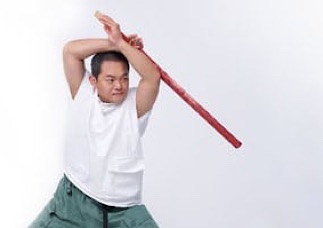

If you’ve encountered Baguazhang in your search for effective internal martial arts, you’ve likely seen practitioners doing something unusual: walking in circles, endlessly, often for the majority of their training time. This isn’t ritualistic movement or moving meditation—circle walking is the fundamental training methodology that builds the specific biomechanical attributes that make Baguazhang function as a combat system. Understanding why Baguazhang trains by walking a circle requires looking at how circular motion develops structure, conditions force pathways through rotation, and creates the timing skills necessary for this art’s tactical approach.
The Biomechanical Logic of Continuous Rotation
Baguazhang’s circle walking—called zou zhang or “walking the circle”—trains your body to maintain structural integrity while in constant rotational motion. Unlike linear arts that emphasize forward-backward weight shifting or static stances, Baguazhang requires you to generate power while turning, redirect incoming force through spiral pathways, and change facing angles continuously during engagement.
Walking the circle ingrains several biomechanical patterns simultaneously:
- Coordinated spinal rotation: Your entire vertebral column learns to rotate as a connected unit rather than twisting at isolated segments, which would compromise structural strength and create vulnerability.
- Differential hip mechanics: The inside and outside legs develop distinct but complementary roles—the inside leg provides the vertical axis and structure, while the outside leg drives movement and generates power through the ground path.
- Centripetal force management: Your body learns to counterbalance the outward force that circular motion generates, keeping your structure directed toward the circle’s center where an opponent would be located.
- Continuous weight transition: Unlike static stance training, circle walking keeps you perpetually in the process of shifting weight, which develops the ability to strike, uproot, or change direction at any point in your stepping cycle.
These aren’t abstract qualities—they’re specific physical adaptations that occur when your nervous system repeatedly solves the problem of staying structurally connected while turning. The circle provides consistent directional demand that wouldn’t occur in straight-line walking or stationary stance work.
Force Path Conditioning Through Repetitive Geometry
The circular path creates a training environment where force consistently enters your structure from a predictable angle—tangent to the circle. This geometric consistency allows your body to optimize the pathways that forces travel through your skeletal structure, fascia, and muscular connections.
In the Luo Dexiu lineage of Yizong Baguazhang, we emphasize that power generation comes from ground reaction force traveling through properly aligned bones and connective tissue, not from muscular tension or mysterious energy. Circle walking conditions these pathways by:
Training your feet, ankles, knees, and hips to absorb and redirect ground force through the spiral created by your body’s rotation. Each step becomes a repetition of the same mechanical problem—how to take force from the ground, rotate it through your structure, and express it through your hands or body while maintaining balance and readiness.
The repetition is the point. By walking the circle for extended periods—traditionally practitioners would walk for an hour or more—you’re not building muscular endurance. You’re allowing your nervous system to find increasingly efficient solutions to the force-path problem, eliminating unnecessary tension, discovering skeletal alignments that carry load with minimal effort, and developing reflexive coordination between your limbs and spine.
This is why circle walking feels difficult initially but becomes effortless with proper practice. You’re not getting stronger in the conventional sense—you’re getting more structurally efficient.
Tactical Timing and Angular Development
Baguazhang’s fighting method emphasizes obtaining and maintaining angular advantage—getting to positions where you can strike effectively while the opponent cannot. Circle walking directly trains the footwork and spatial awareness this requires.
When you walk the circle, you’re constantly moving through changing angles relative to a fixed center point. This develops your ability to control distance and angle simultaneously, which is exactly what you need when circling an opponent in application. The circle’s constraint forces you to turn your waist and change your facing while your feet follow the curved path—the same coordination needed to walk around an opponent’s flank while keeping your structure directed toward them.
The timing component comes from learning to recognize when in your stepping cycle you’re stable enough to issue force or absorb impact. Circle walking makes every point in your step a training opportunity. Unlike stepping practice that has clear beginning and end points, the circle’s continuity means you’re always mid-process, which better reflects the chaos of actual fighting where you rarely get to complete an ideal technique from a perfect starting position.
Why the Circle Rather Than Other Patterns
Students sometimes ask why not walk other patterns—figure eights, squares, or random paths. The answer lies in the circle’s unique properties as a training tool.
A circle provides constant, consistent rotational demand. Every step turns you the same amount. This consistency allows your body to optimize and refine, finding deeper efficiency through repetition. Variable patterns might seem more “realistic,” but they prevent your nervous system from developing the refined adaptations that come from repetitive practice.
The circle is also tactically relevant to Baguazhang’s method. In application, we use circular footwork to orbit an opponent, and the training circle represents that opponent’s position. You’re not just walking in circles abstractly—you’re rehearsing the spatial relationship you’ll create in fighting.
Additionally, the circle’s geometry creates a natural diameter of approximately 5-8 feet in most practice, which happens to be the distance range where Baguazhang’s techniques are designed to operate. Smaller circles create too much rotational demand and compromise structure; larger circles lose the turning challenge and become more like straight-line walking.
Integration: From Circle Walking to Application
The attributes developed through circle walking—rotational structure, spiral force paths, and angular timing—directly transfer to Baguazhang’s fighting applications. The palm changes (techniques practiced while walking) add specific tactical solutions to the foundational movement pattern, but the circle walking itself is already combat training, not preparation for combat training.
When you practice circle walking correctly, you’re building a body that can turn without losing structure, issue force while rotating, and transition continuously between steps. These are the essential physical skills that make Baguazhang’s tactical approach viable. Without them, the techniques are just choreography.
This is why in the Yizong Baguazhang lineage, circle walking remains central throughout your development, not just a beginner exercise. Advanced practitioners walk the circle to refine increasingly subtle aspects of structure and timing that only become apparent after the gross movement pattern is established.
If you’re interested in beginning your Baguazhang training with a clear, practical foundation, we’ve created a free guide that breaks down the essential elements. Get your copy of The 5 Foundations of Baguazhang at https://yizongtw.com/free-guide/ and start developing these skills with precise, demystified instruction.
Frequently asked questions
How long should I practice circle walking in Baguazhang?
Beginners should start with 10-15 minutes per session to build basic structural patterns without fatigue-induced compensation. Traditional practice builds toward 30-60 minutes as your efficiency improves and your body adapts to the rotational demand. The goal is quality repetition, not endurance suffering.
What size circle should I walk for Baguazhang practice?
A circle diameter of 5-8 feet works for most practitioners, creating sufficient rotational demand without compromising structure. Taller individuals may use slightly larger circles; the test is whether you feel consistent turning through your waist rather than just pivoting your feet.
Do I need to walk the circle both directions in Baguazhang?
Yes, you should practice both clockwise and counterclockwise to develop symmetrical structure and force path conditioning. Most practitioners have a preferred direction but neglecting the other creates imbalances that limit your adaptability in application.
Is circle walking meditation or martial arts training?
Circle walking is functional martial arts training that develops specific biomechanical attributes for combat—rotational structure, force path efficiency, and angular timing. While some practitioners find it meditative, that’s a side effect, not the purpose. The training produces measurable physical skill development.