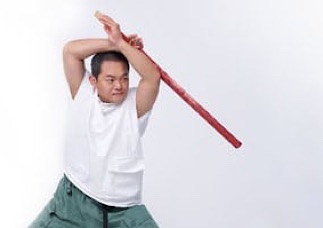

Yi Theory, Boxing Theory, and the Internal Martial Mindset
“Boxing theory and classical treatises cannot serve as proof in themselves. Their validity must be tested through actual combat. Many manuals offer only ‘the beauty of a dream,’ yet lack ‘the difficulty of realizing that dream.’ They are often overly mystified and deficient in practical value.”
Throughout the long course of transmission, traditional martial arts have inevitably absorbed layers of historical mysticism. In modern times, many practitioners of the internal arts have fallen into conceptual confusion: some over-abstract the art, pursuing spiritual cultivation while diluting its martial essence; others over-mythologize it, idolizing internal power and seeking a one-strike supernatural victory.
This volume opens with a clear declaration: to strip away metaphysical packaging and restore the core principles of Yizong Baguazhang in terms of real combat and biomechanics.
1.1 Yi Theory as Guidance, Martial Skill as the Core
The theoretical framework of Baguazhang borrows from the I Ching—the alternation of Yin and Yang, and the mutual generation and restraint of the Five Phases—as its philosophical reference. This integration of Eastern philosophy with embodied practice forms the distinctive cultural foundation of Chinese martial arts.
However, the Yizong system clearly asserts that Yi theory is a relative guiding principle, not an absolute framework. Its purpose is to enrich and refine Baguazhang conceptually, offering a systematic and coherent method for examining and developing technique. If practitioners rigidly impose trigrams and symbolic interpretations, they risk deviating from the essence of martial art.
The essence of martial art is combat and the ability to subdue an opponent. It is the integrated expression of strength, speed, and responsiveness. Excessive preoccupation with philosophical speculation, while neglecting foundational physical training and live application, will cause martial art to lose its practical value.
Therefore, one core principle must be established:
Martial skill is primary; Yi theory is supportive.
What we ultimately study is the art of striking and controlling others. Any interpretation that strays from this standard will produce disastrous consequences in real confrontation.
1.2 Seeking Stillness Within Motion · The Science of Dynamic Balance
Baguazhang emphasizes changing palm techniques and circular walking as its fundamental mode of movement. Its outward expression flows like drifting clouds and moving water, with the momentum of a coiling dragon.
Many hold a stereotypical view that circle walking merely serves to confuse the opponent. In reality, it serves two essential purposes:
I. Will Training: Seeking Stillness Within Motion
While the body continuously shifts and transforms, the mind must cultivate inner stillness within movement. In high-intensity confrontation, tension, pressure, impatience, and fear significantly diminish combat performance and may lead to loss of control.
Through sustained circular walking and turning, Baguazhang trains the practitioner to maintain internal calm and focused awareness amid extreme dynamism, thereby shortening reaction time.
II. Structural Power: Seeking Balance Within Imbalance
The stepping method requires a laterally turned torso moving in a vertical pathway, deliberately creating instability. The practitioner must find balance within imbalance—seeking harmony within misalignment, stability within instability.
By repeatedly training under dynamic instability, coordination and lower-body resistance are strengthened. Once the body adapts to this limit-control condition, it can instantly reorganize under strong external impact, maintaining structural integrity in combat.
1.3 Redefining Hard and Soft · Cross-School Verification
In traditional discourse, “hard” and “soft” are often misunderstood as simple muscular tension or looseness. Within the Yizong framework, precise definitions are required:
Definition of Hard (Gang):
Hard refers to compact, properly aligned force application. It emphasizes decisive issuing of power and the landing point of force. Its essential nature is offensive.
Definition of Soft (Rou):
Soft refers to smooth transitional transformation. It emphasizes refinement and subtlety within change. Its essential nature is retreating, yielding, and redirecting.
Rigidity is not hardness; limpness is not softness. In combat, one cannot rely solely on hardness to the point of stiffness, nor solely on softness to the point of slackness. Hard and soft must alternate in function.
Cross-School Theoretical Validation
This understanding is not unique to Baguazhang but reflects a shared principle among Chinese internal martial systems.
Taijiquan:
Emphasizes progressing from soft to hard, accumulating softness into hardness. Though appearing gentle, it concentrates full-body power into explosive release at the moment of issuance—such as inch-force or shaking force—demonstrating penetrating power.
Xingyiquan:
Emphasizes progressing from hard to soft, accumulating hardness into softness. Built upon drilling, rising, falling, overturning, and direct forceful advance, it eventually develops concealed power and transformative power.
Baguazhang:
Seeks hardness within softness and softness within hardness. Through circular movement and redirection, it guides the opponent, then erupts with sudden force at the point of contact.
In truth, there is no absolute division between “internal” and “external” styles. Such distinctions are largely artificial constructs. Authentic martial arts—whether Shaolin or original Wudang traditions—are complete systems in which hardness contains softness and softness contains hardness.
Internal systems enter through softness to reach hardness; external systems enter through hardness to reach softness. Ultimately, both aim at the highest state:
The harmonious integration of hard and soft.